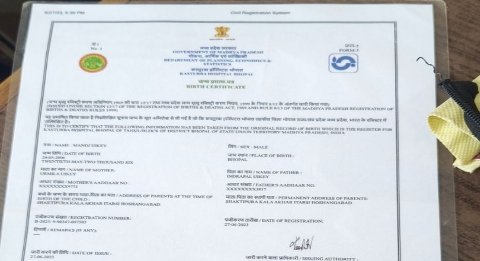
A birth certificate is the most fundamental legal document proving a person’s identity, date of birth, place of birth, parentage, and citizenship. In India, it is mandatory under the Registration of Births and Deaths Act, 1969. Here’s why it’s essential and how adults (even those aged 50+) can get one through late registration.
Why is a Birth Certificate Necessary?
This document is required throughout life for various purposes:
- Proof of Identity and Age: Essential for making Aadhaar card, Voter ID, Driving License, PAN card.
- Passport and International Travel: Primary document for passport applications.
- Education and Employment: School/college admissions, government jobs, age-related benefits (pension, retirement).
- Marriage and Property: Marriage registration, inheritance claims, proving parental links for property transfer.
- Government Schemes: Subsidies, benefits, opening bank accounts, insurance policies.
- Citizenship Proof: Especially for NRIs or in cases of disputed nationality.
Without it, many legal and government processes get blocked. According to UNICEF, lack of a birth certificate can deprive individuals of basic rights like education, healthcare, and employment.
Even a 50-Year-Old Can Easily Obtain One – Late Registration Process
Yes, you can apply for a birth certificate at any age. Registration within 21 days of birth is free, but late applications incur fees. Even for very old births (pre-1989 or 30-50 years ago), it’s possible with additional documents and verification.
Online Process (Easiest Way – Via CRS Portal)
Use the Government of India’s Civil Registration System (CRS) portal: crsorgi.gov.in
- Visit the portal and go to the “General Public” section.
- Sign Up (if new user) – Enter name, mobile number, email, and verify with OTP.
- Log in.
- Select “Report Birth” or “Birth Registration.”
- Fill the form: Birth date, place, parents’ names, address, etc.
- Upload required documents (scanned PDF/JPG).
- Pay late fees online (if applicable).
- Submit – You’ll get an application number.
- Track status and download/print the certificate once approved.
Many states (e.g., UP, Bihar, Delhi) have their own portals, but CRS is national and widely accepted.
Offline Process
- Visit your local Municipal Corporation, Nagar Palika, Gram Panchayat, or Registrar’s Office.
- Fill the late registration form.
- Submit documents and pay fees.
- After verification, receive the certificate.
Required Documents (More for Adults/Old Births)
- Hospital discharge summary or birth report (if available).
- School leaving certificate/mark sheet (Class 10th is best).
- Aadhaar card, Voter ID, Ration card (for identity).
- Affidavit from parents (notarized).
- Application explaining the delay.
- If records unavailable: Obtain Non-Availability Certificate (NABC) from local registrar.
- For delays over 1 year: May require magistrate order or police verification.
Fees and Timeline
- Within 21 days: Free or minimal (up to ₹20).
- Late: ₹50–500 (depends on delay and state).
- Timeline: 7–30 days (online is faster); older cases may take 1–3 months.
Tip: If facing issues, contact the local registrar or helpline. The digital certificate from the CRS portal is fully valid. Don’t delay – apply today! 😊